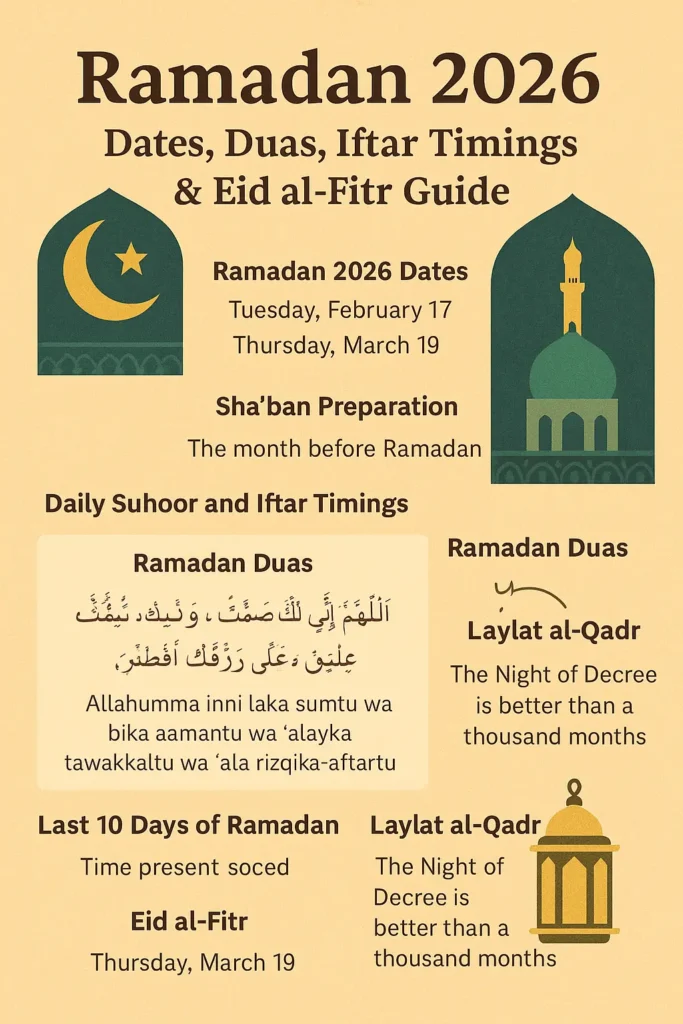
Ramadan is a month of spiritual purification, forgiveness, and increased rewards. Reciting Ramadan-specific duas brings blessings and acceptance of your fasts.
1️⃣ Dua Before Fasting (Suhoor)
Arabic:
وَبِصَوْمِ غَدٍ نَّوَيْتُ مِنْ شَهْرِ رَمَضَانَ
Transliteration:
Wa bisawmi ghaddin nawaitu min shahri Ramadan
Meaning:
“I intend to keep the fast for tomorrow in the month of Ramadan.”
2️⃣ Dua for Breaking Fast (Iftar)
Arabic:
اللّهُمَّ لَكَ صُمْتُ وَعَلَى رِزْقِكَ أَفْطَرْتُ
Transliteration:
Allahumma laka sumtu wa ‘ala rizqika aftartu
Meaning:
“O Allah! I fasted for You, and I break my fast with Your provision.”
3️⃣ Dua for Laylat-ul-Qadr
Arabic:
اللَّهُمَّ إِنَّكَ عَفُوٌّ تُحِبُّ العَفْوَ فَاعْفُ عَنِّي
Transliteration:
Allahumma innaka ‘afuwwun tuhibbul ‘afwa fa’fu ‘anni
Meaning:
“O Allah! You are Most Forgiving, and You love forgiveness; so forgive me.”
4️⃣ Dua for Seeking Forgiveness
Arabic:
رَبِّ اغْفِرْ لِي وَارْحَمْنِي وَاهْدِنِي
Transliteration:
Rabbi ighfir li warhamni wahdini
Meaning:
“O Lord, forgive me, have mercy on me, and guide me.”
FAQ – Ramadan Duas
Q1: Can I recite any dua during Ramadan?
Yes, all sincere duas are accepted, but specific Ramadan duas carry extra reward.
Q2: How many times should I recite dua for Rizq?
Daily recitation after Fajr and before Iftar is recommended.
Q3: What is the best time to recite Laylat-ul-Qadr dua?
During the last 10 nights of Ramadan, especially odd nights (21st, 23rd, 25th, 27th, 29th).
Q4: Can I read these duas in English?
Yes, understanding the meaning is encouraged, but reciting in Arabic is Sunnah.